Minimally Invasive Spine Surgery
1 Hoag Drive, Newport Beach, CA 92658
(949) 764-1411
Looking for Minimally Invasive Spinal Surgery?
Our comprehensive team of specialists, physical therapists and spinal surgeons put patient-focused care at the forefront to provide the best quality care for the neck and back.
We’re dedicated to helping patients come back strong from spinal issues, utilizing next-generation technological advances, conservative approaches and the latest and most effective minimally invasive procedures. From spinal fusion to ending the pain of a herniated disc, for minimally invasive spinal surgery contact the Spine Institute today at (949) 764-1411.
Read on to learn about minimally invasive spinal surgery, including the specific types and conditions that can be treated and the many benefits of utilizing less-invasive techniques.
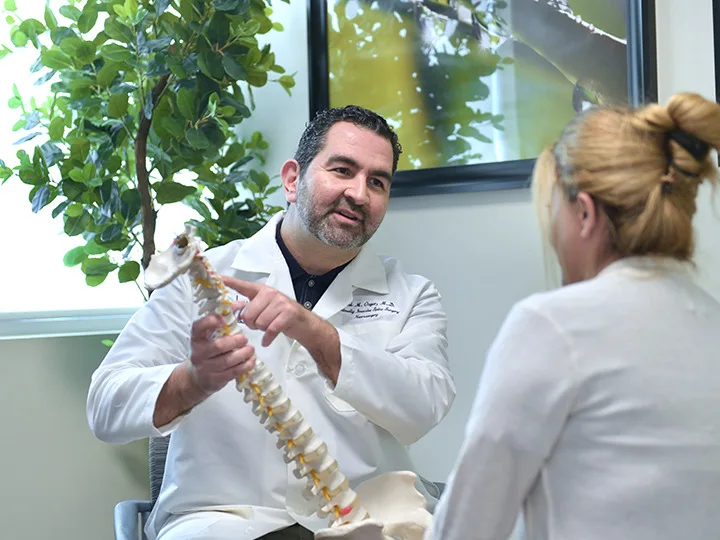
What is Minimally Invasive Spinal Surgery?
Minimally invasive spinal surgery is a type of surgery that uses short incisions, insertable cameras and small, specialized instruments to access and correct problems with the spine, including the vertebral column, spinal discs and surrounding soft tissue.
Minimally invasive spine surgery is an alternative to traditional “open” surgery for the spine, which is often performed through a long incision through the skin. Potential benefits of minimally invasive spine surgery include less postoperative pain, faster recovery time and less visible scarring.
- Types of Surgery
- Conditions Treated
- Benefits
- Find a Specialist
What are the Benefits of Minimally Invasive Spine Surgery?
When compared to traditional “open” spinal surgery, minimally invasive approaches for the spine offer patients a wide range of benefits, including:
Less scarring: Depending on the condition being treated, traditional spinal surgery can result in long scars on the back or torso which may be very visible while undressed or wearing a bathing suit. Because the incisions utilized in minimally invasive spine surgery are smaller — about an inch long or less — any resulting scars will likely be much less noticeable.
Less postoperative pain: A portion of the painful symptoms many patients feel after traditional surgical treatment may be due to the incision that often must be made through the skin and underlying tissues to access the spine. Because minimally invasive spine surgery utilizes much smaller incisions, postoperative pain is often greatly reduced.
Shorter hospital stays: Most people who have minimally invasive spine surgery can go home the same day or the next day.
Faster recovery time: Because less-invasive techniques cause less damage and disruption to the tissues, patients usually recover more quickly than those who’ve had traditional surgery, letting them get back to their daily activities sooner.
Reduced risk of complications: minimally invasive spine surgery is associated with a lower risk of infection, bleeding and other complications.