Epilepsy Program
520 Superior Ave, Suite 205, Newport Beach, CA 92663
- About
- Diagnosis
- Treatments
- Epilepsy Monitoring Unit
- Education & Resources
- FAQs
- Meet the Team
Medical Management
At Hoag, our goal is to help every patient live life with fewer seizures and improved quality of life. For many, this begins with medical management—non-surgical treatment options that can effectively reduce or even eliminate seizures. More than 60% of patients achieve good seizure control with antiepileptic medications, making this the most common and effective first step in treatment.
Our epilepsy specialists take into account each patient’s specific diagnosis, health history, and lifestyle when determining the most appropriate therapies. Because medications can sometimes cause side effects or interact with other prescriptions, Hoag’s epileptologists work closely with patients and their primary care physicians to carefully manage drug therapy over time.
More About Medication Treatment for Epilepsy
Antiepileptic drugs (AEDs) are designed to reduce the brain’s tendency to generate abnormal electrical activity that leads to seizures. The goal is not only to stop seizures but also to allow patients to live as safely and independently as possible. For many people, medication is the best way to control seizures while avoiding surgery.
Selecting the right medication is a personalized process. Hoag specialists will:
Review seizure type and frequency:
Different medications work better for different seizure types.
Assess patient lifestyle and health:
Factors such as age, pregnancy plans, and other health conditions guide treatment choices.
Start with the lowest effective dose:
To minimize side effects while achieving seizure control.
Adjust over time:
Medications are often fine-tuned based on response and tolerance.
Because epilepsy medications can interact with other drugs, it’s essential to have ongoing management from an epileptologist—a neurologist with specialized training in seizure disorders.
While treatment is always individualized, commonly prescribed antiepileptic drugs may include:
Levetiracetam (Keppra®)
Often well tolerated with fewer drug interactions.
Lamotrigine (Lamictal®)
Frequently used for focal and generalized seizures, with mood-stabilizing benefits.
Valproic acid (Depakote®)
Effective for many seizure types but not recommended in all patient populations.
Topiramate (Topamax®)
May be used in patients with both epilepsy and migraine.
Your care team will discuss the risks, benefits, and alternatives to ensure you understand the best option for your situation.
The Importance of Seeing an Epileptologist
While primary care physicians and general neurologists play an important role, epilepsy care is most effective under the guidance of a specialist trained in seizure disorders. Epileptologists at Hoag:
Provide precise diagnoses based on seizure type and underlying causes.
Help patients navigate complex medication decisions.
Manage side effects and long-term health impacts.
Explore advanced therapies if medications alone are not successful.
With expert guidance, patients can feel confident they are receiving the most up-to-date, effective care available.
Surgical Treatments
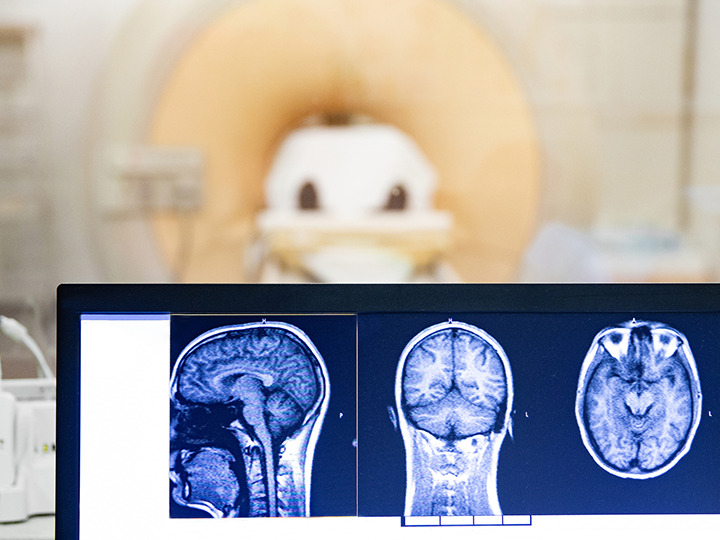
In approximately one third of patients, anticonvulsant medications cannot adequately control seizures. When seizures cannot be controlled with medication alone, Hoag offers the latest techniques in surgical intervention. Surgery can eliminate seizures in the majority of patients and reduce seizures in most of the remainder. Various testing is done to help determine where seizures are starting in the brain. This may include implantation of electrodes for intracranial monitoring. Once the location causing seizures has been determined, Hoag neurosurgeons utilize state-of-the-art neuronavigational technology and sophisticated magnetic resonance imaging techniques to precisely reach and treat the seizure areas safely.
Types of Surgical Treatments Available at Hoag
Stereoelectroencephalography (sEEG) is a diagnostic procedure using miniature electrodes measuring less than 1 mm in diameter to record brain activity in the location of seizures. This minimally invasive technique does not require traditional incisions or hair shave, while still permit a 3-dimentional map of the seizure network. By localizing seizures with sEEG, Hoag neurologists and neurosurgeons can predict how to cure seizures with subsequent treatments. Patients stay in the Epilepsy Monitoring Unit for one week, on average, during brain mapping and go home the day after sEEG removal.
Laser therapy is a minimally-invasive, hair-sparing procedure that can cure seizures by treating the seizure-origin within the brain. Following a short procedure performed in the MRI scanner, patients stay overnight before returning home. Since there is no incision, patients return to normal activities quickly with minimal discomfort.
Patients who have benefited from this technology have a 87% seizure freedom rate compared to the national average of 61%.
MR-guided-focused ultrasound is a technique used to treat the brain noninvasively. This treatment is FDA-approved for movement disorders and used on clinical trials to treat seizure disorders without requiring general anesthesia or operation.
RNS technology combines real-time surveillance for seizures with gentle stimulation to stop seizures at their origin before they spread. This fully implantable neuromodulation system reduces seizures by up to 80%. Importantly, RNS is the only technology that records seizure frequency and EEG at home. This provides valuable information for the patient’s provider when managing treatment.
Originally developed in the 1980’s, this technology gained approval for the treatment of seizures in recent years. DBS blocks seizure propagation, preventing seizure spread even when seizures are generalized. Seizures may be reduced by up to 80%. Additionally, the system is rechargeable, thereby tripling the life expectancy of the implanted battery before needing replacement.
VNS activates the vagal nerve in the neck to modulate nervous system activity. VNS is an effective therapy for those who are not candidates for other therapies. VNS may reduce seizures by 50-60% and be used in children as young as four years old.
Hoag offers minimally-invasive approaches to reduce or cure seizures. These techniques include noninvasive procedures, minimally-invasive procedures, and endoscopic procedures. By reducing trauma to the tissue, patients are exposed to less surgical risk, faster recovery, less pain, and improved cosmetic result.
Hoag utilizes hair-sparing surgical approaches. From laser surgery to open surgery, our neurosurgeons utilize plastic-surgery style approaches to maximize positive results. In many of our procedures, minimal- or no-hair is shaved during surgery. This permits individuals to return to normal activities without the feeling of stigma associated with brain surgery.
Hoag surgeons have mastered surgical approaches by training across the globe to bring the latest surgical techniques to the individuals of Orange County. The range of surgical approaches routinely performed at Hoag include craniotomy, lobectomy, lesionectomy, topectomy, corpus callostomy and disconnection procedures.
The Pickup Family Neurosciences Institute at Hoag became one of the first hospitals in the nation to obtain and use the Medtronic Stealth Autoguide Robotic Platform to treat epileptic seizures and the first hospital in the world to perform minimally invasive brain biopsy using this technology.
The Stealth Autoguide Robot uses a small pinpoint hole through which neurosurgeons can place electrodes or biopsy needles precisely in the brain to diagnose or treat epilepsy, cancer or other neurological conditions. Without this tool, these procedures typically involve shaving large portions of the scalp, making larger incisions and removing pieces of skull to expose the brain for surgery.
The highly advanced surgical tool replaces open cranial surgery for certain patients and greatly increases accuracy and patient recovery. The device can be used for a range of neurological conditions that require precision guidance for placement of diagnostic electrodes, biopsy or targeted laser ablation.