



Hoag Memorial Hospital Presbyterian
1 Hoag Drive, Building #41
Newport Beach, CA 92663
949-722-6237
Comprehensive evaluation with accurate diagnosis is the foundation for achieving successful outcomes. That’s why it’s important to seek care from a center that provides academic level care from a multidisciplinary, specialized team of hepatobiliary and pancreatic experts experienced in the accurate diagnosis of pancreatic cancer, as well as other complex gastrointestinal diseases.
Beginning with a thorough evaluation that includes a comprehensive physical exam, personal medical history review and state-of-the-art diagnostic workup, Hoag’s multidisciplinary team of board-certified, fellowship trained pancreatic experts carefully evaluate and pinpoint the nature of the cancer, so the most appropriate personalized treatment options can be employed.
Hoag’s state-of-the-art diagnostic technologies provide our team with the latest modalities in the accurate diagnosis of pancreatic cancer and other disorders. Some of the progressive imaging studies that may be utilized include:
Volume Rendering Computed Tomography (CT) is the most recent advance in CT technology. Only a few centers in Southern California have this technology, which creates highly accurate 3-D scans of the pancreas. This enables physicians to properly stage the cancer and determine whether the tumor is resectable.
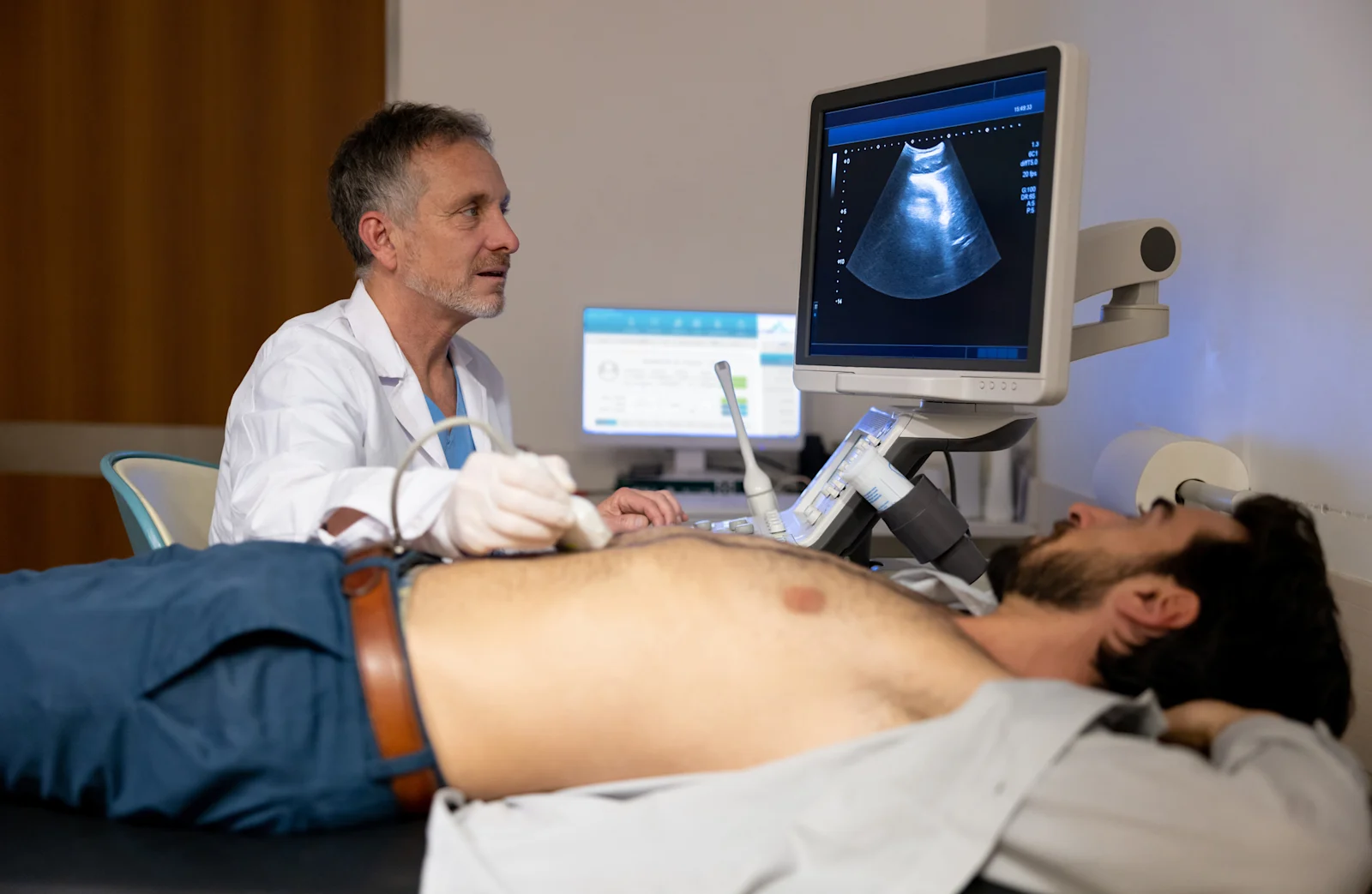
Endoscopic Ultrasound (EUS) uses an ultrasound device to make images of your pancreas from inside your abdomen. The physician may also collect a sample of cells (biopsy) during EUS.
Endoscopic Retrograde Cholangiopancreatography (ERCP) uses a dye to highlight the bile ducts in the pancreas, so that an accurate image of the bile duct and pancreatic duct may be obtained. This study is performed to rule out certain diseases of the pancreas and the bile duct. The physician may also insert small tubes (called stents) into the bile duct or the pancreatic duct, if they are obstructed, to relieve the obstruction. Additionally, a tissue sample (biopsy) may be collected during ERCP.
MRCP is a modified MRI that utilizes specialized software to obtain a composite image of the pancreatic duct and the bile duct from the digital MRI images. This study provides similar information to an ERCP. However, as a diagnostic study, MRCP study is preferred to ERCP since this procedure is not invasive.
Tumor Markers are used to determine whether certain substances are being released into the blood. Tumor markers are often obtained to assess the probability of a cancer in a patient who has a lesion. While high tumor markers may indicate cancer, they are not definitive since non-cancerous conditions of the pancreas and liver can falsely elevate these tumor markers.
Diagnostic Laparoscopy is a minimally invasive surgical procedure used to examine internal organs by direct visualization. Small incisions are made in the abdominal wall, and a thin, lighted tube called a laparoscope is inserted. This procedure allows the surgeon to evaluate whether the cancer has spread outside of the pancreas prior to performing surgery. This is an important part of planning for surgery.
Biopsy is the removal of a sample of tissue for testing. This procedure is performed to definitively diagnose pancreatic cancer, and may involve other methods outside of laparoscopic biopsy, such as endoscopic ultrasound or fine-needle aspiration.
It’s important to note that proper diagnosis and staging of pancreatic cancer is critical to developing a successful treatment plan. That’s why it’s so important to seek proper evaluation and treatment from a healthcare expert experienced in the most advanced pancreatic cancer care.
When it comes to pancreatic cancer and other gastrointestinal diseases, Hoag Family Cancer Institute provides a full array of progressive treatment options. As a recognized leader and high-volume provider of innovative gastrointestinal care, Hoag’s multidisciplinary team of digestive disease experts performs some of the most advanced gastrointestinal procedures available in the nation with clinical outcomes that rival national figures.
Hoag Family Cancer Institute provides state-of-the-art, compassionate pancreatic cancer care. Hoag’s committed to accurate diagnosis, combined with progressive therapeutic options enables Hoag patients to achieve some of the highest clinical outcomes in the nation.
To schedule a comprehensive diagnostic evaluation, or a second-opinion consultation with a Hoag pancreatic cancer expert, call us at 949-764-5350.
Pancreatic cancer begins in the pancreas, a small, tapered organ about six inches long that sits behind the stomach. When healthy, the pancreas has two different types of tissue with two different functions. Exocrine tissue, which makes up the majority of the pancreas, creates enzymes that help the body digest food. Endocrine tissue in the pancreas creates and releases hormones called insulin and glucagon that help the body maintain healthy levels of blood sugar.
When changes in the pancreas cause cells to mutate and replicate out of control, this can cause pancreatic cancer. According to the American Cancer Society, most pancreatic cancers begin in exocrine tissue, with around 95 percent classified as adenocarcinomas. Also known as ductal carcinoma, this form of the disease usually originates in the ducts that carry enzymes inside the pancreas.
Rarer forms of pancreatic cancer include:
Colloid Carcinoma
Adenosquamous Carcinoma
Squamous Cell Carcinoma
Pancreatic cancer is particularly dangerous in that it often presents few or no symptoms until after it has spread to other tissues inside the body. Some symptoms of pancreatic cancer can include:
Itchy skin or rash
Pain that extends from the abdomen to the back
Loss of appetite
Blood clots
Unexplained fatigue
Unexplained or unintentional weight loss
Bowel obstruction, due to a tumor pressing against the intestine and blocking the flow of waste through the body
Jaundice, which is a yellowing of the eyes and skin
Dark-colored urine
Light-colored stools
Sudden onset of diabetes, or recent difficulty controlling diabetes with medication and diet
While the vast majority of shoulder pain is related to strains, muscle pulls, arthritis or the wear-and-tear of aging, there are rare cases where pain in the shoulder or under the shoulder blade was found to be a symptom of pancreatic cancer, including this case from the American Journal of Gastroenterology and this case from 2013. In these cases, pancreatic cancer shoulder pain is due to tumors spreading from the pancreas, then pressing on nearby nerves as they grow. These instances are rare, and most shoulder pain isn’t related to pancreatic cancer. However, if you experience unexplained pain in your shoulder that is hindering your ability to function, see your doctor.
Though the root cause of pancreatic cancer is still unknown, there are a number of factors that are believed to increase your risk of developing pancreatic cancer. These include:
A history of pancreatitis, which is a painful inflammation of the pancreas.
Diabetes, particularly Type 2
A family history of pancreatic cancer
Being older, as pancreatic cancer is usually diagnosed in people over age 65.
A family history of certain genetic conditions, including Lynch syndrome, Familial Atypical Mole-Malignant Melanoma Syndrome (FAMMMS), mutation of the BRCA2 gene, Peutz-Jeghers Syndrome and Familial Melanoma and Hereditary colon cancer.
Excessive alcohol use
Smoking
Eating a high fat diet
Obesity
Ways to reduce your risk of developing pancreatic cancer may include:
Avoid being overweight by eating a healthy diet and getting regular exercise to avoid being overweight. Here at Hoag, we offer help with weight management to help reduce this risk and others that come with being overweight.
Don’t smoke
Use alcohol in moderation
Avoid Type 2 diabetes by cutting sugar and eating a healthy diet