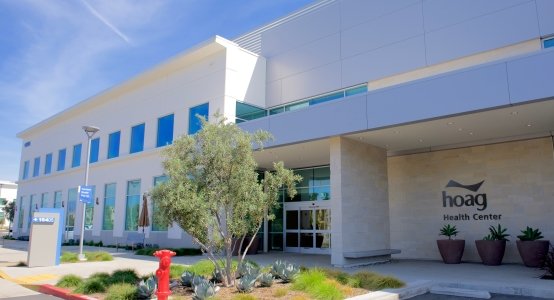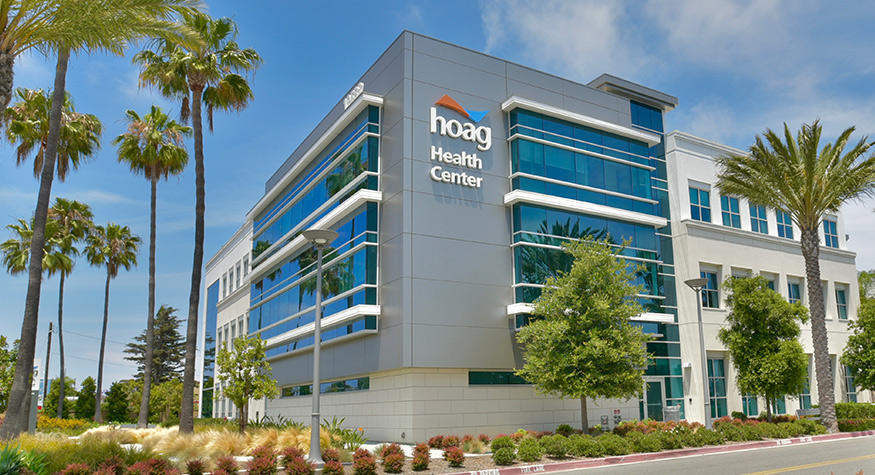



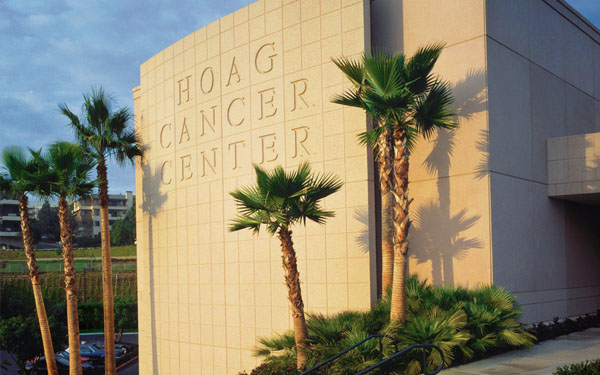
Hoag Memorial Hospital Presbyterian
1 Hoag Drive, Building #41
Newport Beach, CA 92663
949-722-6237
Hoag Family Cancer Institute offers exceptional medical and surgical treatment for gallbladder cancer. Our subspecialized team of medical oncologists and surgeons employ groundbreaking research and the latest diagnostics and therapies to give you the very best odds at beating cancer.
Gallbladder cancer is cancer that begins in the gallbladder, which is a small, pear-shaped organ located behind the liver that stores and releases bile. Produced in the liver, bile is a fluid that helps your body digest fats from the food you eat as it passes through the small intestine.
According to the American Cancer Society, the vast majority of gallbladder cancers are adenocarcinomas that begin in the glandlike cells that line the surface of the gallbladder.
Other, rarer types of gallbladder cancer include:
Adenosquamous carcinoma
Squamous cell carcinoma
Carcinosarcoma
Gallbladder cancer often presents no symptoms in its early stages. However, some known signs of gallbladder cancer can include:
Pain in the abdomen, particularly in the upper-right part of the abdomen
Unexplained, recurring nausea or vomiting
Jaundice, which is a yellowing of the skin and eyes. In gallbladder cancer cases, jaundice is usually caused by a blockage of the bile ducts that can cause a chemical called bilirubin to build up in the blood
Lumps in the abdomen, which can be caused by swelling in the gallbladder or liver
Loss of appetite
Dark-colored urine
Light-colored or greasy stools
Unexplained weight loss
A swollen abdomen
Unexplained skin itching
There are a number of factors that are believed to increase your risk of developing gallbladder cancer. These include:
A history of gallstones, which are small, stone-like structures that can develop in the gallbladder. Gallstones are common, and most people who have them will never develop gallbladder cancer. However, the American Cancer Society says that up to 4 out of 5 people diagnosed with gallbladder cancer have gallstones at the time of their diagnosis
“Porcelain gallbladder,” which is a condition in which the walls of the gallbladder become covered in calcium.
Obesity
Family history of gallbladder cancer
Smoking
Being female, as gallbladder cancer is three to four times more common in women than men, according to the American Cancer Society
Being older, as the disease is most often diagnosed in those over age 65. The average age of diagnosis with gallbladder cancer is 72 years old, according to the ACS
Being of Mexican, Latin American or Native American heritage, as gallbladder cancer risk is highest for those groups
Having choledochal cysts, which are cysts that occur on the common bile duct that transports bile from the gallbladder to the small intestine
A history of gallbladder polyps, which are bulges that form in the gallbladder
Primary sclerosing cholangitis, which is a scarring condition caused by inflammation of the bile ducts
Currently, there are no blood tests or other non-invasive techniques that can definitively screen for gallbladder cancer. Because the disease usually presents no symptoms, gallbladder cancer is often found during unrelated abdominal surgery, gallstone-related surgery to remove the gallbladder, or after the cancer has spread and started to impact other organs.
After discussing your symptoms, your physician will likely give you a thorough physical exam and may order blood tests. While not able to show the presence of gallbladder cancer, these blood tests can show elevated levels of albumin, bilirubin, liver enzymes and other substances that may indicate problems in your gallbladder, bile ducts or liver.
Your blood will also likely be checked carefully for what’s called tumor markers, which are substances made by cancer cells.
Depending on the outcome of those blood tests, your physician may order imaging tests to get a look inside your body. These may include:
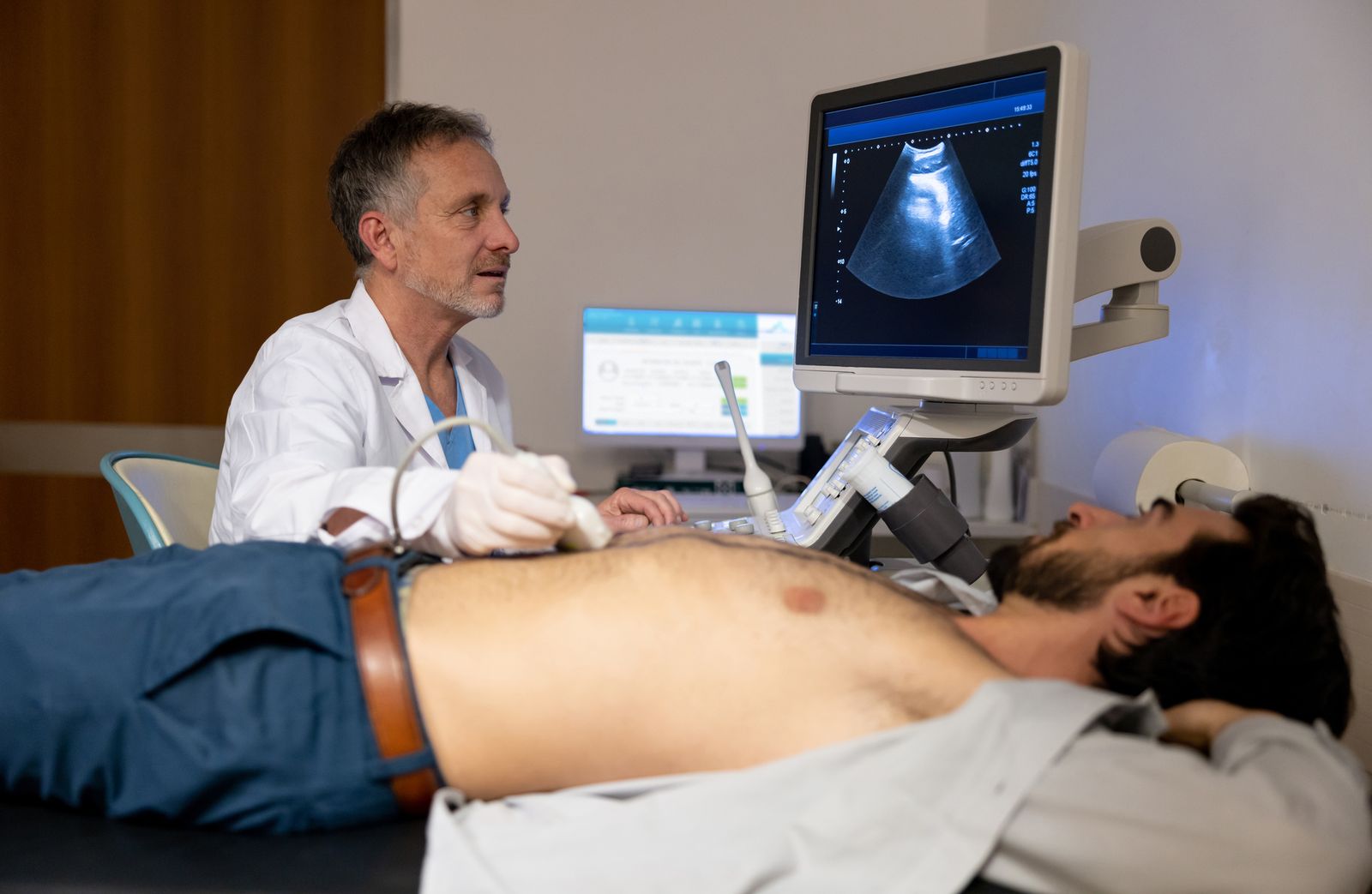
Abdominal ultrasound, which utilizes sound waves to create images of the organs and other structures inside the abdomen using a radio wave source outside the body.
Endoscopic or laparoscopic ultrasound, in which an ultrasound generating device on a long, flexible cable is inserted down the throat or through small incisions made in the abdomen so the ultrasound device can be positioned closer to the gallbladder
Computed tomography (CT) scan
Magnetic resonance imaging (MRI) scan
Cholangiography, which is an imaging technique that looks directly at the bile ducts
Biopsy, in which a small sample of tissue or bile fluid is painlessly removed so that it can be tested for the presence of cancer
Accurate diagnosis is a priority at Hoag. A more accurate diagnosis leads to better outcomes and fuller recoveries for patients. Among the advanced techniques Hoag uses to diagnose gallbladder cancer: Volume Rendering Computed Tomography, which creates highly accurate 3-D scans of the abdomen, allowing physicians to properly stage the cancer and determine whether surgery is a good option. Hoag is one of only a few centers in Southern California that have this advanced imaging technology.
If your doctor determines you have gallbladder cancer, the next step is to determine whether the cancer is limited to the gallbladder or has spread to other organs and structures inside the body. How much the cancer has spread will help determine a treatment path and priorities.
Diagnosis is key to your treatment and recovery, and no hospital in California is more committed to accuracy in diagnosis than Hoag. At Hoag Family Cancer Institute, our gallbladder cancer team includes medical oncologists, radiation oncologists, advanced endoscopists and surgeons, all work together to provide the right treatment for you. Learn more about Hoag’s specialized gallbladder cancer team.
At Hoag Family Cancer Institute, our multidisciplinary team offers globally-recognized options for those facing this challenging disease, with treatments tailored to meet each patient’s specific needs.
At Hoag, surgical options for gallbladder cancer may include:
Laparoscopy, which involves inserting a long, flexible camera through incisions in the abdomen to look for evidence of cancer that wasn’t revealed in previous scans, to plan for upcoming surgeries or to determine whether a patient’s cancer is resectable, meaning that it can be removed completely, or unresectable, which means it is too far advanced for surgery.
Simple cholecystectomy, which is an operation to fully remove the gallbladder. People can live long lives without their gallbladder and removal of the gallbladder is common in the treatment of conditions like gallstones. This procedure can either be performed “open” through an surgical incision in the abdomen, or laparoscopically, utilizing thin video devices and surgical tools inserted through very small incisions in the abdomen. However, in the case of known gallbladder cancer, a more extensive operation is usually performed, known as…
Extended (or radical) cholecystectomy, in which surgeons remove at least the gallbladder, liver tissue near the gallbladder and all nearby lymph nodes. Depending on how advanced the cancer is, the surgeon may also remove a larger portion of the liver, the common bile duct, the ligament that connects the liver and intestines, the pancreas, part of the small intestine or other organs that have been invaded by cancer cells.
According to the American Cancer Society, gallbladder cancer is rare, but only a small percentage of gallbladder cancers are considered curable when discovered. That said, there are widely-differing opinions on how advanced gallbladder cancer can be before surgery is no longer a good option.
For that reason, the ACS suggests getting a second opinion, particularly from a major, highly-experienced cancer center like Hoag Family Cancer Institute. Facing a gallbladder cancer diagnosis in Orange County? Then get a second opinion that could save your life. Trust Hoag.
The Hoag team performs more complex gallbladder cancer surgeries than any other surgical program in Southern California. We utilize state-of-the-art, robotically-assisted and minimally-invasive procedures that may not be available elsewhere. Being a high-volume gallbladder cancer surgical program enables the gastrointestinal experts at Hoag to achieve a technical skill level many other centers just can’t match.
At Hoag, we often combine techniques to address complex conditions like gallbladder cancer from all sides. In addition to surgery, non-surgical options for gallbladder cancer at Hoag may include:
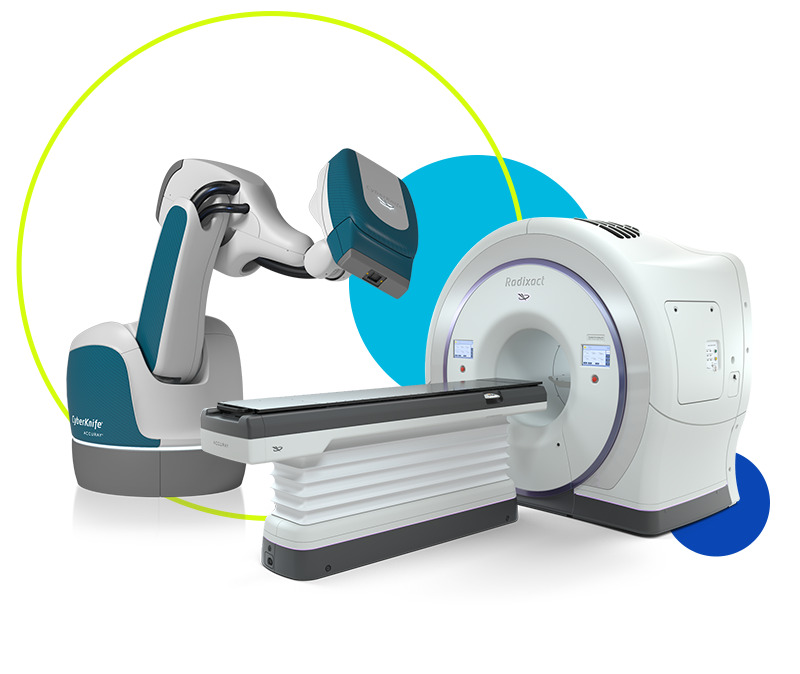
Radiation therapy, which may be recommended either before or after surgery, often in combination with chemotherapy. Hoag is one of only two hospitals in California with the ViewRay MRIdian™ linear accelerator, the most advanced radiation treatment available in the United States for cancers of the abdomen. By utilizing MRI imaging with a linear accelerator, Hoag clinicians can obtain real-time, high resolution images of tumors and surrounding soft tissues. This allows for precise application of radiation during treatment, even if the tumor shifts due to breathing or other factors. That level of precision allows Hoag clinicians to deliver a higher, potentially more effective, radiation dose to the tumor with minimal impact on healthy surrounding tissue.
Hoag Radiation Oncology also offers other state of the art technologies such as Tomotherapy HD to provide for the most accurate image guided radiotherapy systems today. Explore more about Hoag’s state-of-the-art equipment here.
Chemotherapy uses drug therapy to help destroy cancer cells. Chemotherapy is often combined with radiation therapy to treat cancer that has spread beyond the esophagus to nearby organs. Chemotherapy and radiation may be used after surgery to reduce the risk that gallbladder cancer may recur. In individuals with advanced gallbladder cancer, chemotherapy may be used alone or it may be combined with targeted drug therapy.
Targeted therapy and precision medicine, utilizes DNA testing of patients tumors, to help select and formulate drugs that attack specific abnormalities within cancer cells. For example, the targeted drug erlotinib (Tarceva) blocks chemicals that signal cancer cells to grow and divide. This drug is usually combined with chemotherapy for use in people with advanced gallbladder cancer.
Hoag is committed to leading the way in state-of-the-art technologies and advanced treatment options. Part of this commitment includes clinical research with the goal of helping patients live longer, healthier lives. Through carefully planned clinical trials, researchers evaluate the safety and effectiveness of new ways to diagnose, treat and prevent diseases or conditions. Treatments studied in clinical trials might be new drugs or new combinations of drugs, new surgical procedures or devices, or new ways to use existing treatments. View clinical trials for gallbladder cancer here.