


Hoag Memorial Hospital Presbyterian
1 Hoag Drive, Building #41
Newport Beach, CA 92663
949-722-6237
Hoag Family Cancer Institute offers exceptional medical and surgical treatment for bile duct cancer. Our subspecialized team of medical oncologists and surgeons employ groundbreaking research and the latest diagnostics and therapies to give you the very best odds at beating cancer.
Bile duct cancer (also known as biliary cancer or cholangiocarcinoma) is cancer that occurs in the tubes that connect your liver, gallbladder and small intestine and which carry bile, a bodily fluid that helps our bodies digest food.
There are three main types of bile duct cancer:
Intrahepatic cholangiocarcinoma: Sometimes categorized as a cancer of the liver, this type occurs in the portions of the bile ducts that are inside the liver.
Hilar cholangiocarcinoma: Also called perihilar cholangiocarcinoma, this type involves cancer of the bile ducts that are near to the liver but still outside it.
Distal cholangiocarcinoma: Also known as extrahepatic cholangiocarcinoma, this type of cancer occurs in the bile duct that’s nearest to the small intestine.
The symptoms of bile duct cancer can be different for every patient, and can be similar to symptoms of other, less-serious conditions. Common symptoms can include:
Unexplained fever, weight loss, fatigue, dark urine or night sweats
Jaundice (yellowing of the skin and eyes)
Intense itching
Pain in your abdomen just below your ribs on the right side
Stools that appear white
There are a number of factors that are believed to increase your risk of developing bile duct cancers. These include:
Primary sclerosing cholangitis: a condition that scars and hardens the bile ducts
Congenital bile duct issues: These may include being born with irregular bile ducts, or a choledochal cyst.
Chronic liver disease
Being older, as most cases occur in people over age 50
Smoking
Diabetes
Ways to reduce your risk of developing bile duct cancer include:
Take steps to avoid contracting diabetes, including maintaining a healthy weight, getting regular exercise and eating less sugar
Don’t smoke
Doing what you can to avoid chronic liver disease, including drinking in moderation and being careful to avoid drugs that might harm your liver
If you are experiencing any symptoms that might suggest bile duct cancer, your doctor will talk to you about your symptoms, likely followed by a thorough physical exam and bloodwork. Depending on the outcome of those tests, your doctor may refer you to a specialist for other tests that may include:
Checking for high levels of carbohydrate antigen CA 19-9 in your blood, which can sometimes suggest the presence of bile duct cancer.
Endoscopic Retrograde Cholangiopancreatography (ERCP): In this test, the doctor passes a long, flexible tube with a camera at the end through your mouth, through the stomach and into the bile ducts to visually examine them.
Liver function tests
Imaging tests that may include CT, PET or MRI scans.
Surgical biopsy
The Hoag Family Cancer Institute offers world-class programs to treat cancer of all types, including bile duct cancer, with multidisciplinary teams, state-of-the-art facilities and technology and the latest in cancer therapies.
Treatment options for bile duct cancer depend on many factors, including how advanced the cancer is when detected, your age and any other health issues you may have. Treatments for bile duct cancer vary from patient to patient, but may include:
Surgery
Biliary drainage
Liver transplant
Immunotherapy, which primes your immune system to fight the cancer
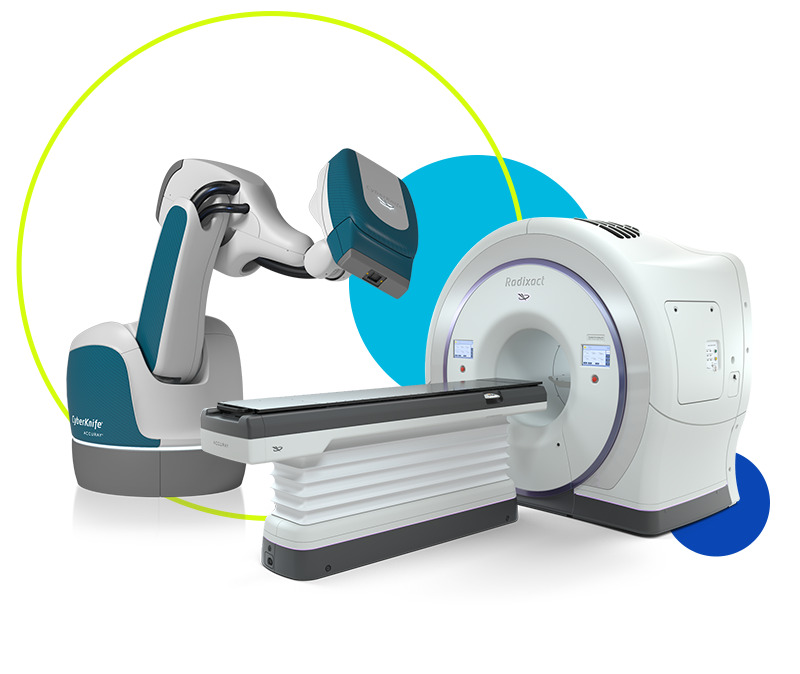
Hoag radiation oncologists and medical physicists work together with the Hoag team of bile duct cancer experts to develop an individualized treatment plan using the latest radiation therapy techniques
Image-Guided Intensity-Modulated Radiation Therapy (IG-IMRT)
Precision Medicine, in which Hoag physicians test the DNA of patients’ tumors, then develop treatments tailored specifically to the mutations that caused the cancer. This allows physicians to treat the cancer very precisely. Hoag is a national leader in the use of precision medicine in several types of cancer, including bile duct cancer.
Facing surgery can be a frightening prospect, but it is a vital component in the successful treatment of many cancers. The Hoag Family Cancer Institute’s medical team includes experienced, fellowship-trained cancer surgeons who utilize the latest techniques and technology in the surgical management of many different cancers, including bile duct cancer.
Hoag’s non-surgical options, including chemotherapy and radiation therapies, are world-class as well. Hoag was recently named a Radiopharmaceutical Therapy Center of Excellence (RTCoE) by the Society of Nuclear Medicine and Molecular Imaging (SNMMI), a distinction held by only 17 centers in the U.S. including Stanford Health Care, Harvard Medical School and the University of California — San Francisco.
Hoag Family Cancer Institute’s Radiation Oncology Program offers personalized services to treat cancers. Explore advanced treatment technologies for cancer treatment available at Hoag.
Hoag is committed to leading the way in state-of-the-art technologies and advanced treatment options. Part of this commitment includes clinical research with the goal of helping patients live longer, healthier lives. Through carefully planned clinical trials, researchers evaluate the safety and effectiveness of new ways to diagnose, treat and prevent diseases or conditions. Treatments studied in clinical trials might be new drugs or new combinations of drugs, new surgical procedures or devices, or new ways to use existing treatments. View clinical trials for biliary-gallbladder cancer here.