Expanding the possibilities in spine surgery
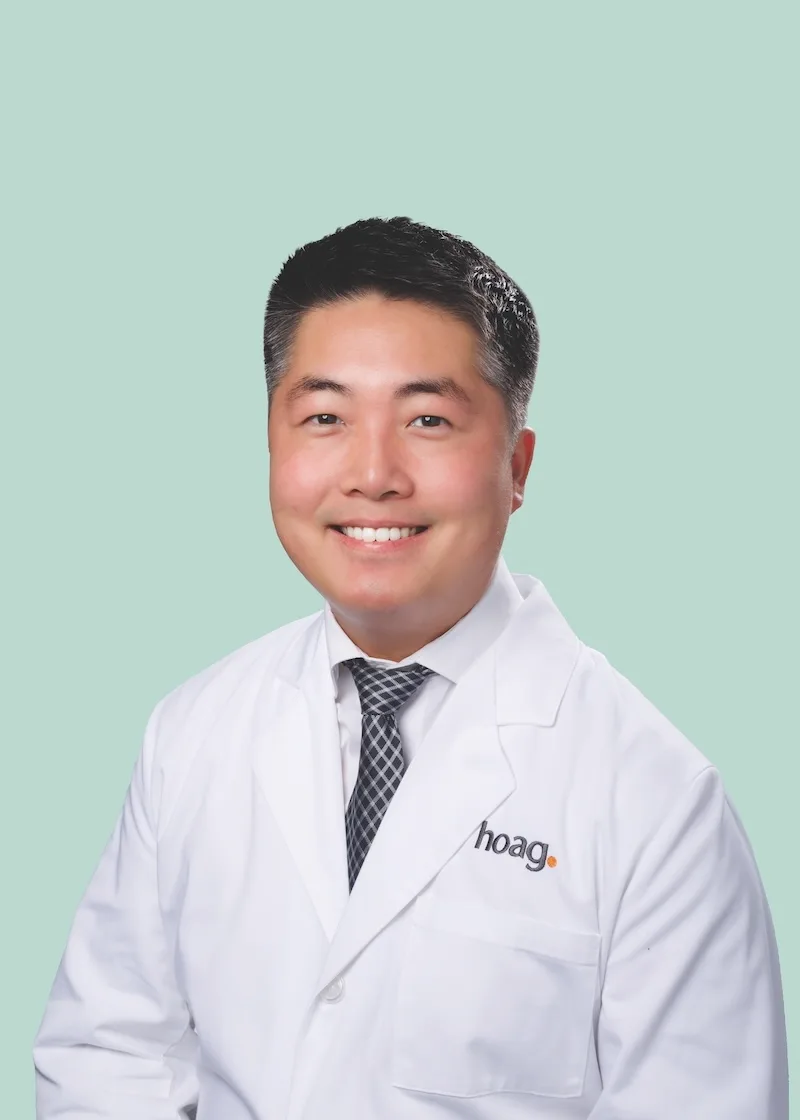
Advanced minimally invasive techniques offer new options for patients For many people living with chronic spine pain, surgery can feel like an intimidating last resort. Dr. Nathan Han, a neurosurgeon at the Hoag Spine Institute, believes the first step isn’t an operation; it’s listening. Rather than beginning appointments by reviewing MRI scans or discussing surgical options, Dr. Han starts with a simple invitation: Tell me what bothers you the most. “The answer isn’t always what shows up on an MRI,” Dr. Han says. “Listening carefully helps us understand not only what’s causing the pain, but how it’s affecting a person’s life.” That philosophy guides Dr. Han's approach to patient care as he helps expand Hoag's spine program, bringing advanced minimally invasive techniques—including biportal endoscopic spine surgery—to more Orange County patients. After completing advanced spine fellowship training at UC San Francisco focused on complex spinal conditions, Dr. Han also pursued specialized training in South Korea, where endoscopic spine surgery continues to push the boundaries of minimally invasive care. The procedure offers new options for some patients who may not be candidates for traditional spine surgery. “My purpose and role at the Hoag Spine Institute is to provide comprehensive spinal care,” he says. “While many academic centers can offer surgeries to patients, we’re really able to provide holistic, patient-centered treatment plans individualized for each person's lifestyles and goals.” Long before he became a neurosurgeon, Dr. Han planned to pursue music, applying to college as a piano performance major. Although he ultimately chose bioengineering instead, a chance to observe a brain tumor surgery as an undergraduate introduced him to a profession that combined everything he loved: creativity, precision and problem-solving. Today, he still plays piano and is married to a Julliard-trained pianist. “Neurosurgery blends art with the mathematical precision of engineering,” he says. “There is a rhythm and creativity to it, but every movement also has to be incredibly deliberate.” That combination of technical expertise and thoughtful listening recently helped one patient regain her independence. An elderly Korean woman suffering from severe spinal stenosis has become increasingly limited by pain. Frail and thin, she was a poor candidate for traditional open spine surgery. Dr. Han performed a biportal endoscopic procedure, reaching the spine through two incisions no larger than a pinky finger to relieve pressure on her spinal nerves while minimizing disruption to surrounding muscles and tissue. The surgery took about an hour. She went home the same day, and within three months, she was walking pain-free. For Dr. Han, the experience was meaningful for another reason. Born in Korea before immigrating to the Bay Area as a child, he was able to care for the patient in her native language, allowing her to fully describe her symptoms, understand her treatment options and feel at ease throughout the process. “Being able to communicate with her directly created a level of comfort and trust that was incredibly rewarding,” he said. It is precisely this kind of connection and commitment to care that drew Dr. Han to Hoag. And as Hoag continues expanding spine services at the Hoag Hospital Irvine Sun Family Campus, Dr. Han sees new opportunities to bring advanced minimally invasive techniques to more patients throughout Orange County. As these technologies continue to evolve, he believes more people—including those once considered poor candidates for surgery—will benefit from procedures that reduce tissue disruption, shorten recovery and help them return more quickly to the lives they enjoy. “Everything we do has a significant, long-lasting impact on a person’s life, and we can’t take that lightly,” he says. “The motivation to pursue excellence is about our patients.” And that starts with listening. Learn more about the Hoag Spine Institute.
Related Articles