Skip to content
  • Pay Your Bill
  • Donate
  • Contact Us
Primary Logo
  • Find Care
  • Explore ServicesChevron Down

    • Primary Carechevron right
    • Cancerchevron right
    • Digestive Healthchevron right
    • Heart & Vascularchevron right
    • Neuroscienceschevron right

    • Orthopedicschevron right
    • Spinechevron right
    • Women’s Healthchevron right
    • Imaging & Radiology Serviceschevron right
    • Other Programs & Serviceschevron right

    2025 U.S. News Image

    Awards & Accreditations

    Hoag Named #1 in Orange County by U.S. News & World Report


    Classes & EventsPatient StoriesPay Your BillHelp paying your bill

  • LocationsChevron Down

    • Hoag Hospital Newport Beachchevron right
    • Hoag Hospital Irvine - Sun Family Campuschevron right

    • Primary Carechevron right
    • Health Centerschevron right
    • Urgent Carechevron right

  • ResourcesChevron Down

    • Patients & Visitorschevron right
    • Resourceschevron right
    • Health Risk Assessmentschevron right

    • Classes & Eventschevron right
    • Support Groupschevron right
    • Patient Storieschevron right

    Michael Coons Stroke on bike

    Patient Stories

    A Stroke Survivor Reflects on the Lifesaving Care He Received at Hoag


    Classes & EventsPay Your BillHoag MyChartHelp paying your bill

  • About HoagChevron Down

    • Overviewchevron right
    • Awards & Accreditationschevron right
    • Safety & Qualitychevron right

    • Community Healthchevron right
    • Culturechevron right
    • Graduate Medical Educationchevron right

Search
Menu
    • Find Care
    • Explore ServicesChevron Down

      • Primary Carechevron right
      • Cancerchevron right
      • Digestive Healthchevron right
      • Heart & Vascularchevron right
      • Neuroscienceschevron right

      • Orthopedicschevron right
      • Spinechevron right
      • Women’s Healthchevron right
      • Imaging & Radiology Serviceschevron right
      • Other Programs & Serviceschevron right

      2025 U.S. News Image

      Awards & Accreditations

      Hoag Named #1 in Orange County by U.S. News & World Report


      Classes & EventsPatient StoriesPay Your BillHelp paying your bill

    • LocationsChevron Down

      • Hoag Hospital Newport Beachchevron right
      • Hoag Hospital Irvine - Sun Family Campuschevron right

      • Primary Carechevron right
      • Health Centerschevron right
      • Urgent Carechevron right

    • ResourcesChevron Down

      • Patients & Visitorschevron right
      • Resourceschevron right
      • Health Risk Assessmentschevron right

      • Classes & Eventschevron right
      • Support Groupschevron right
      • Patient Storieschevron right

      Michael Coons Stroke on bike

      Patient Stories

      A Stroke Survivor Reflects on the Lifesaving Care He Received at Hoag


      Classes & EventsPay Your BillHoag MyChartHelp paying your bill

    • About HoagChevron Down

      • Overviewchevron right
      • Awards & Accreditationschevron right
      • Safety & Qualitychevron right

      • Community Healthchevron right
      • Culturechevron right
      • Graduate Medical Educationchevron right

    • Pay Your Bill
    • Donate
    • Contact Us

    An ovarian cyst on your ultrasound? Here’s what happens next
    August 31, 2026 · 4 min read
    An ovarian cyst on your ultrasound? Here’s what happens next

    If your most recent pelvic ultrasound revealed an ovarian cyst, know this: while cysts can sometimes point to ovarian cancer, the vast majority are harmless and resolve on their own.

    "Functional cysts can be a normal part of the reproductive cycle, so if you have a cyst, it is important to distinguish between a simple cyst and an abnormal growth," says Dr. Lisa Abaid, gynecologic oncologist and co-director of the Hoag Breast & Ovarian Cancer Prevention Program. "Only about 8 to 10 percent of ovarian cysts require medical intervention.”

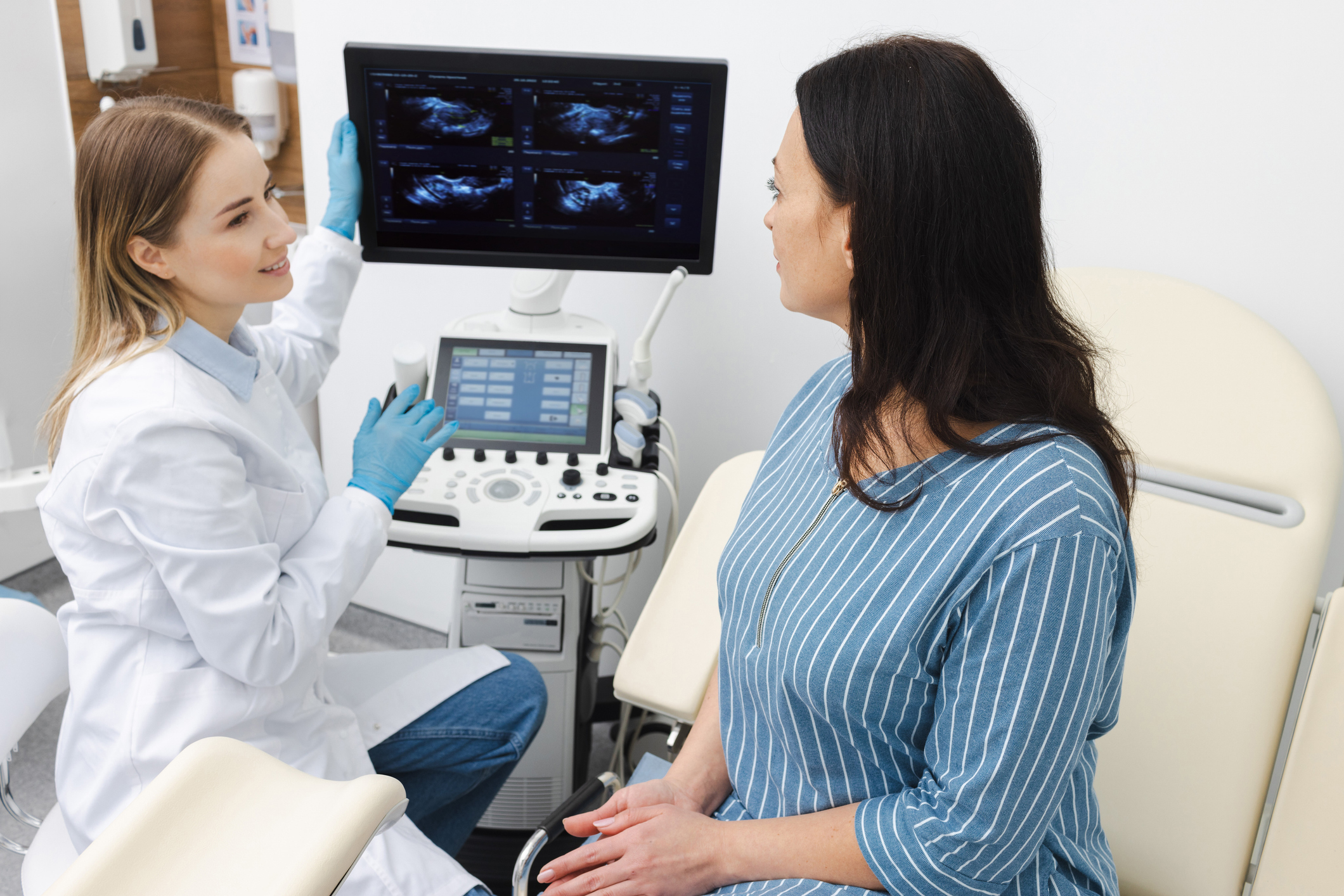
    To determine the difference, a physician will typically order a transvaginal ultrasound to take a closer look at the ovaries.

    What do doctors look for on imaging? A radiologist will look at the size, structure and blood flow of a cyst to determine if it warrants further testing.

    "Most cysts are what we call 'simple,’ a single, thin-walled sac of fluid," Dr. Abaid says. "Those we can often just monitor. It's the complex ones, with solid areas or irregular walls, that get a closer workup, which sometimes includes a CA-125 blood test."

    Cancer antigen 125 (CA-125) is a protein that can become elevated when ovarian cancer is present, though it can also rise for reasons that have nothing to do with cancer, including endometriosis, fibroids and even menstruation, which is why it's factored alongside imaging, age and menopausal status—not on its own.

    When might a cyst be a cause for concern? While cysts are common, they can be an indication of cancer. Your doctor may recommend further testing if:

    • The cyst appears after menopause.

    • Imaging shows complex features such as increased blood flow.

    • The cyst doesn't resolve.

    • CA-125 is elevated.

    • There's a strong family history or a known genetic mutation.

    If several of these factors are at play, the next step is usually a referral to a gynecologic oncologist, who can determine whether surgery is needed and, if so, perform it in a way that allows for accurate staging if cancer is found.

    What if a cyst is cancer? Finding cancer early makes all the difference. Roughly 1 in 91 women will develop ovarian cancer in her lifetime, and outcomes differ enormously by stage at diagnosis. More than 90% of women survive five years when it's caught while still confined to the ovary, compared with roughly 40% after it has spread.

    "That gap is exactly why we pay attention to persistent symptoms and why imaging characteristics matter so much," Dr. Abaid says. "We can't screen every woman for ovarian cancer the way we do for breast or cervical cancer, so listening to your body and following up on findings that don't add up is one of the most powerful tools we have."

    What other symptoms point to possible ovarian cancer? Speak with your doctor if you frequently experience pelvic pain or pressure, bloating, or pain during intercourse. This is especially important if these symptoms happen more than 12 times a month and do not disappear.

    Ovarian cancer symptoms may also include abdominal pain, difficulty eating or feeling full quickly, and urinary urgency. Because these symptoms are common and rather vague, your doctor will help you determine whether they are a cause for alarm.

    "When bloating or pain doesn’t go away, and when it’s paired with other symptoms, such as unexplained fatigue, back pain and unintentional weight loss, it’s important to talk to your doctor about it,” Dr. Abaid says.

    What if I have a family history? Women with BRCA1 or BRCA2 mutations face an increased risk of developing ovarian cancer, as do women with a family history of the disease. So, even if you do not have cysts, it is a good idea to begin talking with your doctor about your risk.

    Hoag Family Cancer Institute’s High Risk Clinic offers risk assessment, counseling, and genetic cancer testing to people who may be at increased risk due to family history.

    “Most ovarian cysts are nothing to worry about. But open communication with your physician is critical when it comes to cancer,” Dr. Abaid says. “If you are contending with symptoms that concern you, or if you simply want peace of mind, it’s worth a conversation with your doctor about next steps.”

    To learn more, call Hoag’s High Risk Clinic at 949-764-7235.


    Related Articles

    Article

    Heat and your heart: What higher temperatures could mean for your cardiovascular healthchevron right
    • August 24, 2026 · 3 min read
    Article

    Article

    Expert advice for common breastfeeding challengeschevron right
    • August 20, 2026 · 3 min read
    Article

    Article

    Hoag First in California to Bring Radiation-Reducing Technology to Complex Vascular Carechevron right
    • August 18, 2026 · 2 min read
    Article

    Discover tools, stories, and guidance shaped by real experiences and shared knowledge.

    View all resourcesChevron right small icon

    Stay up-to-date on the latest news from Hoag

    By submitting this request, you agree to receive communications from Hoag and accept our Privacy Policy and Terms of Use.


    Secondary Logo

    Hoag Personal Service Team(800) 400-4624

    Need to ask a question?Contact Us

    Quick Links

    • Patients & visitors
    • Infection prevention
    • Price Transparency
    • Accepted health insurance
    • Prepare for your visit
    • Clinical trials
    • Hoag MyChart
    • Help paying your bill
    • Price Estimator Tool

    Professionals

    • Patient Transfer
    • Medical professionals
    • Graduate Medical Education
    • Nursing
    • Corporate information
    • Careers

    About Hoag

    • About us
    • Contact us
    • Awards & Accreditations
    • Hoag Medical Group
    • Community health
    • Volunteer with us

    Contribute

    • Foundation
    • Donate

    © 2026 Hoag. All Rights Reserved.Legal

    facebook iconinstagram icontwitter iconyoutube iconlinkedin icon