Skip to content
  • Pay Your Bill
  • Donate
  • Contact Us
Primary Logo
  • Find Care
  • Explore ServicesChevron Down

    • Primary Carechevron right
    • Cancerchevron right
    • Digestive Healthchevron right
    • Heart & Vascularchevron right
    • Neuroscienceschevron right

    • Orthopedicschevron right
    • Spinechevron right
    • Women’s Healthchevron right
    • Imaging & Radiology Serviceschevron right
    • Other Programs & Serviceschevron right

    2025 U.S. News Image

    Awards & Accreditations

    Hoag Named #1 in Orange County by U.S. News & World Report


    Classes & EventsPatient StoriesPay Your BillHelp paying your bill

  • Locations
  • ResourcesChevron Down

    • Patients & Visitorschevron right
    • Resourceschevron right
    • Health Risk Assessmentschevron right

    • Classes & Eventschevron right
    • Support Groupschevron right
    • Patient Storieschevron right

    Michael Coons Stroke on bike

    Patient Stories

    A Stroke Survivor Reflects on the Lifesaving Care He Received at Hoag


    Classes & EventsPay Your BillHoag MyChartHelp paying your bill

  • About HoagChevron Down

    • Overviewchevron right
    • Awards & Accreditationschevron right
    • Safety & Qualitychevron right

    • Community Healthchevron right
    • Culturechevron right
    • Graduate Medical Educationchevron right

Search
Menu
    • Find Care
    • Explore ServicesChevron Down

      • Primary Carechevron right
      • Cancerchevron right
      • Digestive Healthchevron right
      • Heart & Vascularchevron right
      • Neuroscienceschevron right

      • Orthopedicschevron right
      • Spinechevron right
      • Women’s Healthchevron right
      • Imaging & Radiology Serviceschevron right
      • Other Programs & Serviceschevron right

      2025 U.S. News Image

      Awards & Accreditations

      Hoag Named #1 in Orange County by U.S. News & World Report


      Classes & EventsPatient StoriesPay Your BillHelp paying your bill

    • Locations
    • ResourcesChevron Down

      • Patients & Visitorschevron right
      • Resourceschevron right
      • Health Risk Assessmentschevron right

      • Classes & Eventschevron right
      • Support Groupschevron right
      • Patient Storieschevron right

      Michael Coons Stroke on bike

      Patient Stories

      A Stroke Survivor Reflects on the Lifesaving Care He Received at Hoag


      Classes & EventsPay Your BillHoag MyChartHelp paying your bill

    • About HoagChevron Down

      • Overviewchevron right
      • Awards & Accreditationschevron right
      • Safety & Qualitychevron right

      • Community Healthchevron right
      • Culturechevron right
      • Graduate Medical Educationchevron right

    • Pay Your Bill
    • Donate
    • Contact Us

    The MIND diet explained: Can what you eat protect your brain?
    June 22, 2026 · 3 min read
    The MIND diet explained: Can what you eat protect your brain?

    By the time most people start thinking seriously about brain health, they’re usually well into middle age. But what you decide to stock in your kitchen in your 30s may be a powerful tool against cognitive decline, according to Dr. Aaron Ritter, Larkin Family Endowed Chair in Integrative Brain Health and director of the Memory & Cognitive Disorders Program at Hoag’s Pickup Family Neurosciences Institute.

    “How you treat your body, what you eat, affects your overall health,” Dr. Ritter says. “The evidence connecting diet to brain health is compelling, and it keeps getting stronger.”

    What is the MIND diet?

    Developed by researchers at Rush University Medical Center, the MIND diet, which is short for Mediterranean-DASH Intervention for Neurodegenerative Delay, draws from two proven eating patterns: the Mediterranean diet and the DASH diet (Dietary Approaches to Stop Hypertension). Both have been shown to support heart health and reduce inflammation.

    In a nine-year study, participants who closely followed the MIND diet reduced their Alzheimer’s risk by as much as 53 percent. Those who followed it even moderately reduced their risk by about 35 percent. An updated 2025 study published in Current Developments in Nutrition found that adults ages 45 to 75 who adhered closely to the MIND diet were significantly less likely to develop dementia.

    What to eat and what to limit

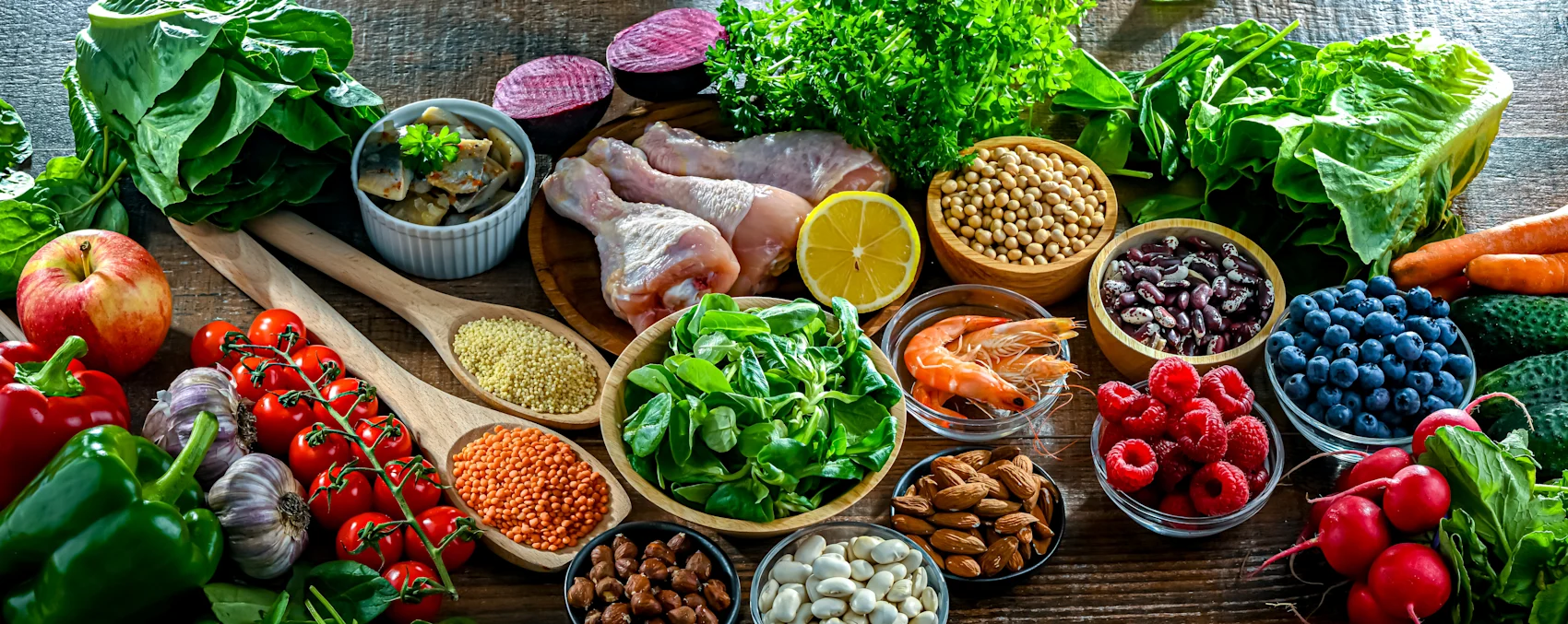
    The MIND plan identifies 10 brain-healthy food groups to prioritize and five to minimize. The focus is on plant-based whole foods rich in vitamins, antioxidants and anti-inflammatory compounds.

    Focus on:

    • Leafy green vegetables (at least 6 servings per week)

    • Berries (at least 2 servings per week)

    • Whole grains (3 servings per day)

    • Beans (4 meals per week)

    • Fish (at least 1 serving per week)

    • Nuts (5 servings per week)

    • Extra virgin olive oil as your primary cooking fat (about 2 tablespoons daily)

    Limit or avoid:

    Red meat, butter and margarine, cheese, pastries and sweets, and fast or fried foods.

    How it works

    The foods emphasized in the MIND diet are rich in compounds that protect the brain from oxidative stress and inflammation—two key drivers of neurodegeneration. Research published in the Journal of Neurology, Neurosurgery & Psychiatry found that adherence to the MIND diet was associated with 8 to 20 percent less age-related brain shrinkage over 12 years. A separate autopsy-based study found that people who regularly ate leafy greens had brains that looked nearly 19 years younger—in terms of Alzheimer’s-related plaque buildup—than those who rarely ate them.

    “This research supports what we’ve seen in cognitive studies involving living Alzheimer’s patients,” Dr. Ritter says. “As we learn more about how inflammation stresses the body and the brain, the more important it becomes to address the role of diet.”

    Diet is part of a bigger picture

    While the MIND diet is a strong foundation, Dr. Ritter emphasizes that nutrition works best alongside other brain-healthy habits:

    Regular aerobic exercise increases blood flow to the brain.

    Quality sleep allows the brain to clear metabolic waste linked to Alzheimer’s.

    Managing chronic stress reduces cortisol levels that, over time, can damage memory-related brain structures.

    Whether you’re in your 60s and thinking about your cognitive health, or in your 30s and just contemplating what to eat for dinner tonight, now is the time to start protecting your brain. Talk to your doctor about a brain health strategy. It just might start in your kitchen.

    Learn more about the Memory & Cognitive Disorders Program at Hoag.


    Related Articles

    Article

    Hoag delivers breakthrough cancer screening to OC firefighterschevron right
    • June 19, 2026 · 2 min read
    Article

    Article

    Prostate cancer isn’t the only risk: What men should know about urologic cancerschevron right
    • June 16, 2026 · 3 min read
    Article

    Article

    The solar shield: Upgrade your summer sun routine without the chemical chaoschevron right
    • June 12, 2026 · 3 min read
    Article

    Discover tools, stories, and guidance shaped by real experiences and shared knowledge.

    View all resourcesChevron right small icon

    Stay up-to-date on the latest news from Hoag

    By submitting this request, you agree to receive communications from Hoag and accept our Privacy Policy and Terms of Use.


    Secondary Logo

    Hoag Personal Service Team(800) 400-4624

    Need to ask a question?Contact Us

    Quick Links

    • Patients & visitors
    • Infection prevention
    • Price Transparency
    • Accepted health insurance
    • Prepare for your visit
    • Clinical trials
    • Hoag MyChart
    • Help paying your bill

    Professionals

    • Patient Transfer
    • Medical professionals
    • Graduate Medical Education
    • Nursing
    • Corporate information
    • Careers

    About Hoag

    • About us
    • Contact us
    • Awards & Accreditations
    • Hoag Medical Group
    • Community health
    • Volunteer with us

    Contribute

    • Foundation
    • Donate

    © 2026 Hoag. All Rights Reserved.Legal

    facebook iconinstagram icontwitter iconyoutube iconlinkedin icon