Skip to content
  • Pay Your Bill
  • Donate
  • Contact Us
Primary Logo
  • Find Care
  • Explore ServicesChevron Down

    • Cancerchevron right
    • Digestive Healthchevron right
    • Heart & Vascularchevron right
    • Neuroscienceschevron right
    • Orthopedicschevron right

    • Spinechevron right
    • Women’s Healthchevron right
    • Imaging & Radiology Serviceschevron right
    • Other Programs & Serviceschevron right

    2025 U.S. News Image

    Awards & Accreditations

    Hoag Named #1 in Orange County by U.S. News & World Report


    Classes & EventsPatient StoriesPay Your BillHelp paying your bill

  • Locations
  • ResourcesChevron Down

    • Resourceschevron right
    • Health Risk Assessmentschevron right
    • Classes & Eventschevron right

    • Support Groupschevron right
    • Patient Storieschevron right

    Michael Coons Stroke on bike

    Patient Stories

    A Stroke Survivor Reflects on the Lifesaving Care He Received at Hoag


    Classes & EventsPay Your BillHoag MyChartHelp paying your bill

  • About HoagChevron Down

    • Overviewchevron right
    • Awards & Accreditationschevron right
    • Safety & Qualitychevron right

    • Community Healthchevron right
    • Culturechevron right

Search
Menu
    • Find Care
    • Explore ServicesChevron Down

      • Cancerchevron right
      • Digestive Healthchevron right
      • Heart & Vascularchevron right
      • Neuroscienceschevron right
      • Orthopedicschevron right

      • Spinechevron right
      • Women’s Healthchevron right
      • Imaging & Radiology Serviceschevron right
      • Other Programs & Serviceschevron right

      2025 U.S. News Image

      Awards & Accreditations

      Hoag Named #1 in Orange County by U.S. News & World Report


      Classes & EventsPatient StoriesPay Your BillHelp paying your bill

    • Locations
    • ResourcesChevron Down

      • Resourceschevron right
      • Health Risk Assessmentschevron right
      • Classes & Eventschevron right

      • Support Groupschevron right
      • Patient Storieschevron right

      Michael Coons Stroke on bike

      Patient Stories

      A Stroke Survivor Reflects on the Lifesaving Care He Received at Hoag


      Classes & EventsPay Your BillHoag MyChartHelp paying your bill

    • About HoagChevron Down

      • Overviewchevron right
      • Awards & Accreditationschevron right
      • Safety & Qualitychevron right

      • Community Healthchevron right
      • Culturechevron right

    • Pay Your Bill
    • Donate
    • Contact Us

    The Benefits of Staying Fit After 50
    August 21, 2025 · 3 min read
    The Benefits of Staying Fit After 50

    By Marvin Dang, DO, Sports Medicine, Hoag

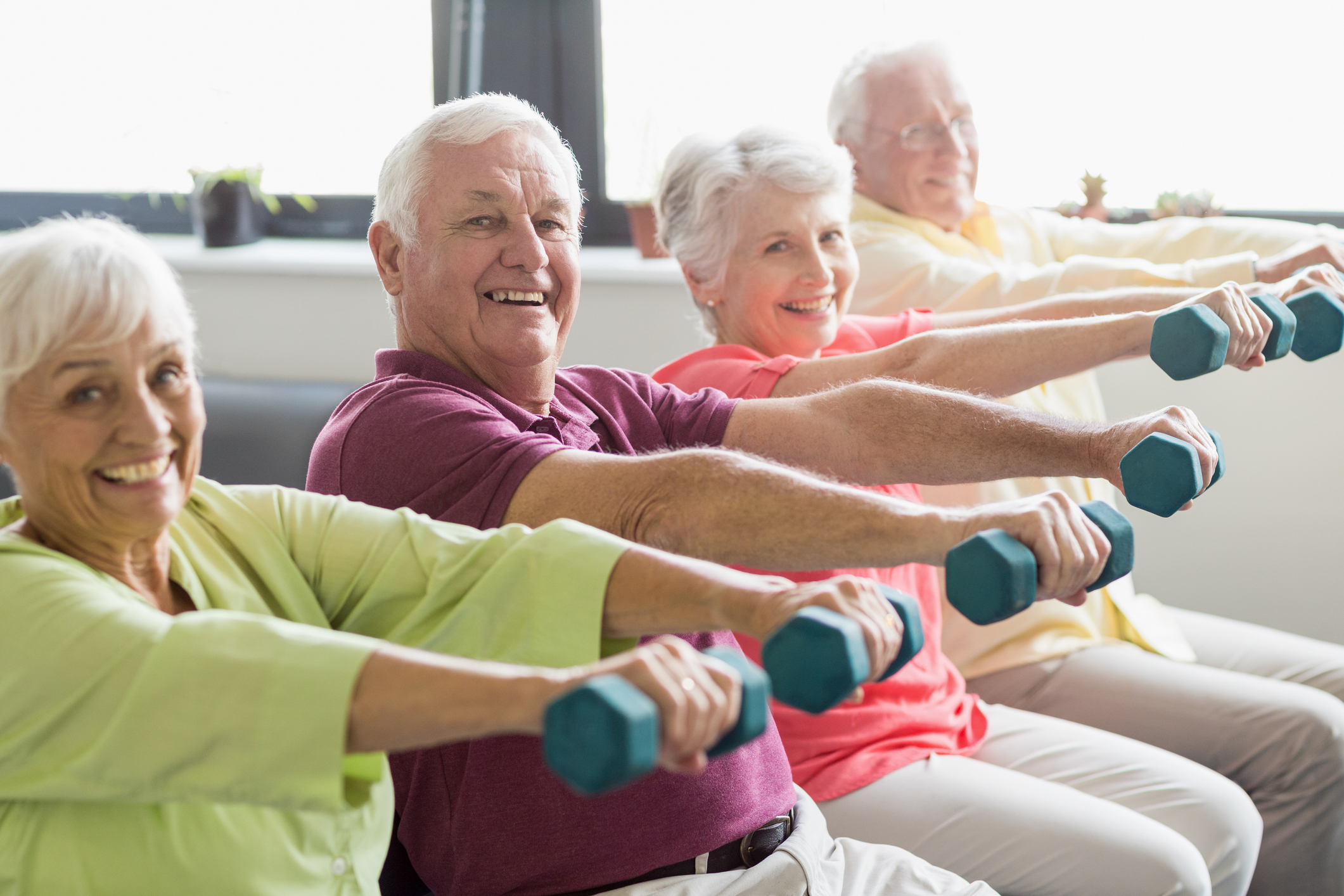
    You’ve likely heard the phrase: “The best time to plant a tree was 20 years ago. The second-best time is now.” The same applies to movement, especially strength, resistance, and aerobic training. While starting younger has lifelong benefits, it’s never too late to begin. In fact, starting after 50 can be one of the most powerful decisions you make for your long-term health.

    Strength and aerobic training support more than just your muscles. They benefit your heart, bones, brain and more. Understanding why it matters, especially after 50, can help you move forward with confidence.

    Why Strength Training Matters More as You Age

    As we age, the body loses muscle mass in a process called sarcopenia, or age-related muscle loss. From ages 40 to 50, we lose about 0.5% to 1% of muscle mass per year, and that rate doubles after age 50. This results in increased risk of falls, decreased physical function, and higher rates of hospitalization. Resistance, or strength training has been shown to slow down this process.

    Benefits of Strength Training

    Cardiovascular Health: Strength training supports heart health. In fact, studies show that people who regularly engage in strength training have a 17% lower risk of cardiovascular disease, including stroke and heart attack.

    Bone Health: It also helps preserve and build bone density. This is especially important for postmenopausal women, who may lose up to 2% of bone density each year due to lower estrogen levels. Loading the bones with external weight helps to increase bone density and reduce the risk of osteoporosis and injuries like hip fractures.

    Brain Health: Strength training benefits the brain, too! Just two to three 45-minute sessions per week over 12 weeks have been shown to improve cognitive abilities like decision making and memory.

    The Power of Aerobic Exercise After 50

    Aerobic activities benefit the body in many ways. They can boost cardiovascular health, improve metabolic function, support bone density, and keep you sharp.

    Benefits of Aerobic Exercise

    Cardiovascular Health: One of the well-known cardiovascular benefits of aerobic exercise is improved blood vessel function which decreases the stiffness of the arteries. This helps offset the loss of estrogen’s benefits on blood vessels as we age.

    Insulin Sensitivity: Aerobic exercise increases insulin sensitivity, allowing the body to more efficiently and effectively process glucose. It also helps muscles absorb more glucose through GLUT-4 receptors, which can reduce hemoglobin A1c levels as much as 0.7%.

    Bone Health: Engaging in aerobic exercise can stimulate bone-building cells called osteoblasts. It also slows bone loss, helping to maintain bone density and reduce the risk of osteoporosis.

    Brain Health: Aerobic activity increases blood flow to the brain, helping to offset circulation issues and arterial stiffness that can contribute to cognitive decline. It can also enhance neuroplasticity, the brain’s ability to form new connections to adapt and learn.

    Final Takeaway

    Whether you’re 50, 60, or beyond, movement is a powerful tool for health and wellness, and it’s never too late to begin. Starting a strength and aerobic training routine now can improve your quality of life for years to come. Talk to your doctor or a qualified trainer about how to get started.

    Learn about Hoag Sports Medicine.

    Related Articles

    Article

    Menopause Isn’t One Moment: Understanding Menopause at Every Stage chevron right
    • February 20, 2026 · 4 min read

    Article

    Migraine triggers: Why your diet could be to blame chevron right
    • February 20, 2026 · 3 min read
    Article

    Article

    Hoag Welcomes Cardiac Surgeon Matthew Wingo, MDchevron right
    • February 19, 2026 · 3 min read
    Article

    Discover tools, stories, and guidance shaped by real experiences and shared knowledge.

    View all resourcesChevron right small icon

    Stay up-to-date on the latest news from Hoag

    By submitting this request, you agree to receive communications from Hoag and accept our Privacy Policy and Terms of Use.


    Secondary Logo

    Personal Service Team(800) 400-4624

    Need to ask a question?Contact Us

    Quick Links

    • Patients & visitors
    • Infection prevention
    • Price Transparency
    • Accepted health insurance
    • Prepare for your visit
    • Clinical trials
    • Hoag MyChart
    • Help paying your bill

    Professionals

    • Medical professionals
    • Graduate Medical Education
    • Nursing
    • Corporate information
    • Careers

    About Hoag

    • About us
    • Contact us
    • Awards & Accreditations
    • Hoag Medical Group
    • Community health
    • Volunteer with us

    Contribute

    • Foundation
    • Donate

    © 2026 Hoag. All Rights Reserved.Legal

    facebook iconinstagram icontwitter iconyoutube iconlinkedin icon