More than a haircut: How compassionate care helped Cindy reclaim her life after brain surgery
For more than a decade, Cindy Lightner struggled to make sense of the way she was feeling. From emotional struggles to memory loss, depression and relentless fatigue, doctors attributed her symptoms to menopause.
“Despite being on hormone therapy, I had this kind of erratic rage that just wouldn’t go away,” she recalled. “It took a toll on many of my relationships.”
Her symptoms multiplied over time and were at their worst during a trip to Italy with friends.
“One of my oldest friends pulled me aside and told me she knew something wasn’t right with me. I was misplacing everything. I was sleeping more and eating less. I had lost my sense of taste. And the big one was that I was limping. At one point I just blurted out, ‘I think I have a brain tumor.’”
Cindy went to Hoag once she returned home. A series of tests and scans proved her instincts were correct. A 10-centimeter mass was impacting every area of her brain, including her frontal lobe—the part of the brain that plays a critical role in regulating emotions and behavior.
She met with Ezequiel Goldschmidt, MD, a neurosurgeon at Hoag’s Pickup Family Neurosciences Institute and Hoag Family Cancer Institute. Removing the mass, he said, would require a craniotomy, a procedure in which a surgeon temporarily removes a part of a patient’s skull to treat a variety of brain conditions. The skull or “bone flap” is then repositioned and secured with metal plates and screws.
One common and distressing aspect of brain surgery for many patients is the scalp shaving required to make the appropriate incisions, and the onslaught of self-esteem issues that can accompany an altered hairstyle and appearance.
Dr. Goldschmidt, however, has found a solution to this.
“He said that instead of shaving the entire side of my head during the preop, he would work with me and a hair stylist, who would shave only the line where he planned to create the incision,” Cindy said.
Cindy became the first patient to participate in Styled for Surgery, a Hoag program developed by Dr. Goldschmidt and made possible through philanthropic support.
“Brain surgery can be incredibly personal and emotionally overwhelming,” he said. “This program is designed with the understanding that how a patient feels about themselves matters deeply to their healing. By preserving their hair as much as possible and involving them in the process, we’re helping patients maintain their sense of identity, dignity and confidence at a time when they need it most.”
The day before surgery, patients meet with Dr. Goldschmidt, who marks the incision site. Patients then consult with Loni Kohlmyer, a professional hair stylist who collaborates with the Hoag Family Cancer Institute’s Oncology Support Services team, to plan a hairstyle that shows as much or little of the incision site as preferred.
“While Loni was cutting, she was taking pictures and sending them to Dr. Goldschmidt, making sure my hair was the last thing I had to worry about,” Cindy said. “The incision kind of blended right into my hair. People that saw me after had no idea I had just had brain surgery.”
Following her craniotomy, pathologists determined the tumor, though rare, was benign. And shortly after her procedure, she noticed a dramatic shift in mood.
“It was as if I had woken up from a very long sleep. I had a ton of energy. I hadn’t felt that great in years.”
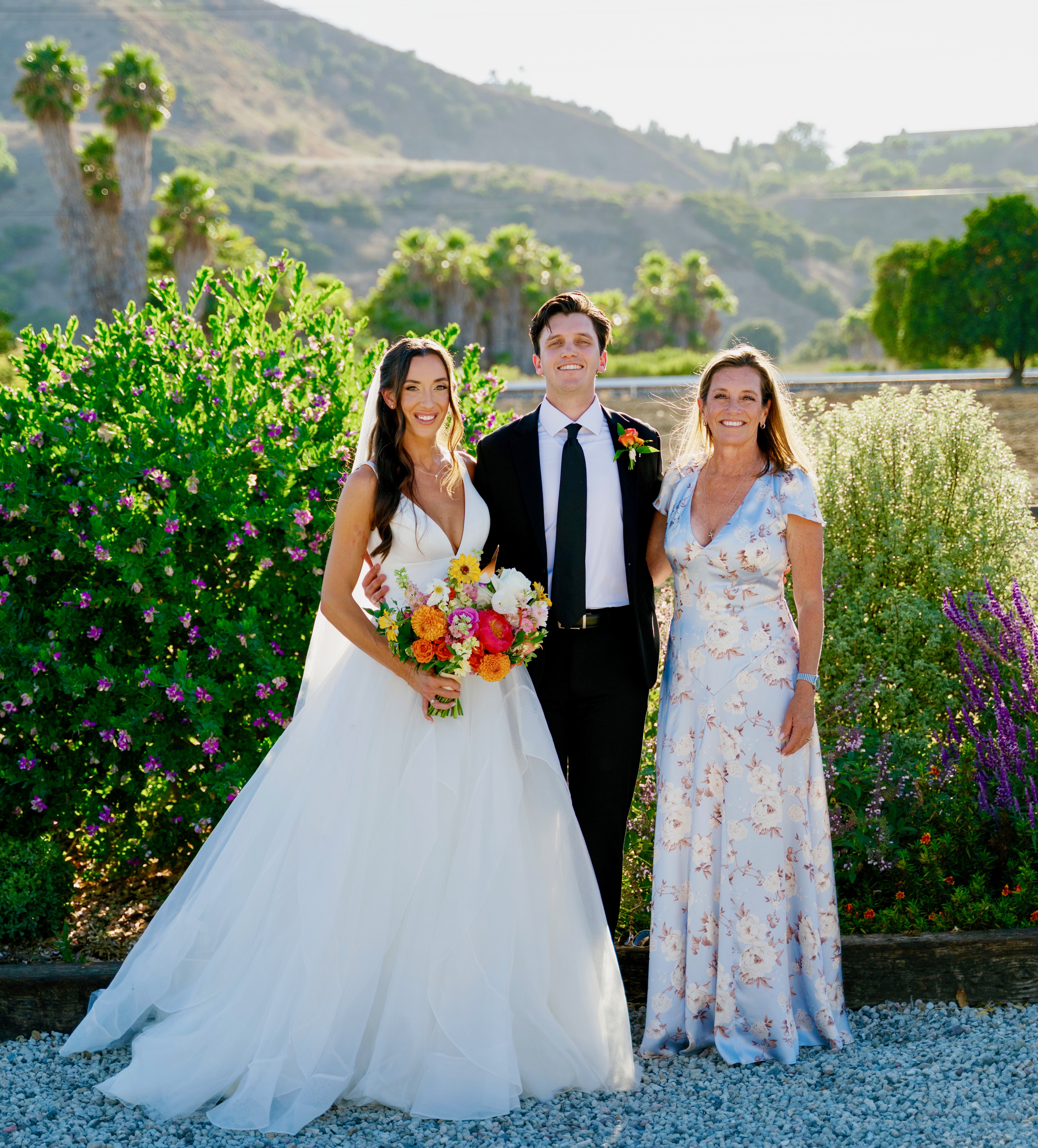
Though recovery following brain surgery can be a long road, Cindy continues to make strides and recently experienced one of her proudest moments—dancing with her son and daughter-in-law at their wedding.
“Looking at where I was—sleeping 20 hours a day, not knowing if I’d ever be myself again—to where I am now, it feels like a miracle. And I’m just so thankful.”
Learn more about Hoag’s Pickup Family Neurosciences Institute and the Hoag Family Cancer Institute.
Photo by Danirae Dunn